I watched Weapons a third time, this time with my girlfriend. At this point, I’m certain I know what the movie is, aside from just being awesome. It’s about how we get weaponized against each other. Whether it’s harmful ideologies, media influences, family pressures, national politics, or addiction, there’s always something that sparks us to harm others.
But Weapons isn’t a single-theme movie. It tackles many things at once. I didn’t even consider one layer until my girlfriend shared something she read before we watched it: that the film exposes the darkness hidden in middle-American suburbs and how we never really know what goes on behind closed doors.
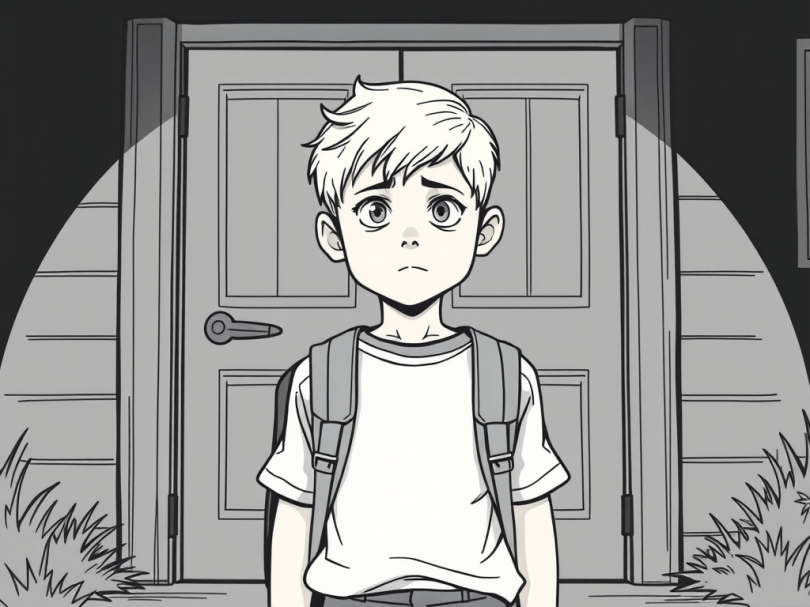
At first, my arrogant side scoffed at that. It seemed like a stretch. But… was it? Maybe not. The film’s bigger themes sit in plain sight, but it’s not unreasonable to walk away with that interpretation. After all, nobody in town had any clue what Alex lived through daily. How could they?
So yes — my girlfriend accepts that I’m a film junkie and an overthinker. Meaning that after a movie, TV episode, or even a random YouTube clip, I’ve got a brainful of thoughts I have to unload. After Weapons, I had way too much to get out of my system.
Teachers are not parents
This hit me differently because I’m a teacher. Earlier this year, our staff development session asked us: what role do you want with your students, and what role do you think you have? I want to be a coach. I feel like a dad.
Between March and May, I hugged three crying students — each struggling with breakups or mental health. Every hug felt wrong. Physical touch with students crosses professional lines, something Marcus (Benedict Wong) would no doubt agree with. And yet, those same students wrote me thank-you notes for being the adult who was present when others couldn’t be.
My students are 18–20 years old. They drive, live alone, some even work. If one of them breaks down, I’m not going to stand like a statue. And if a student opens up in an essay, my feedback won’t just be about grammar. The line between support and overstepping is blurry. Still, I’m pretty sure following them home and peeking through their windows — Justine-style — isn’t it.
Ironically, Justine’s boundary-crossing saves the day. Without her interference, Gladys might have taken Alex and continued terrorizing new communities. She wasn’t supposed to get involved. But thank God she did.
Alcohol as a weapon
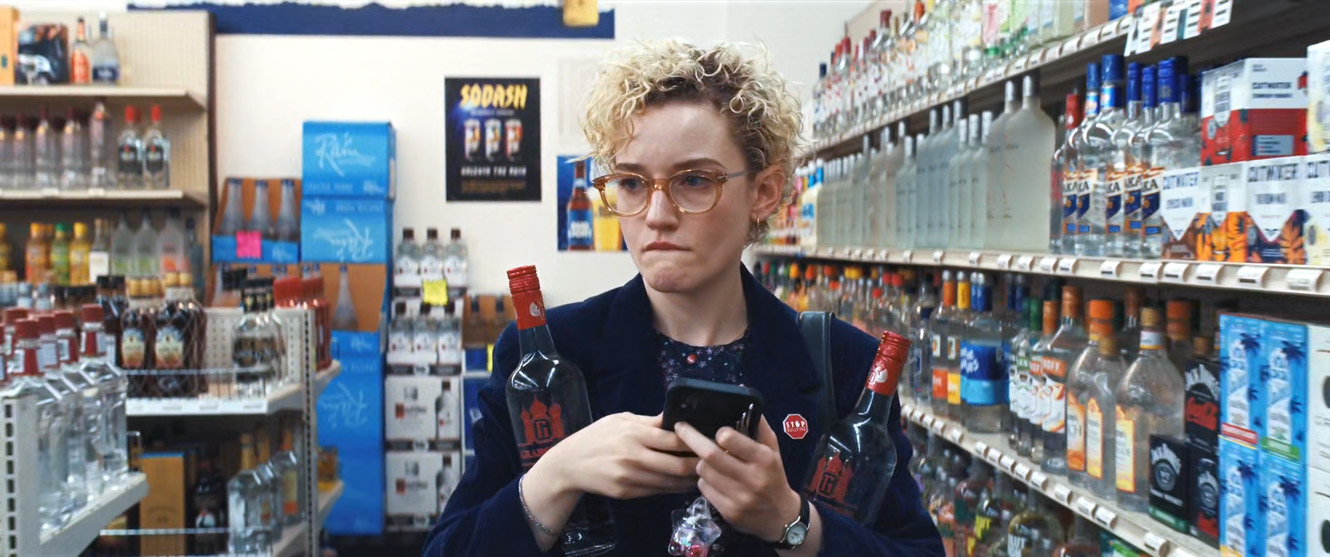
Justine’s other problem is alcohol. She drinks to keep busy, to avoid dealing with herself. When I’m not at my best, I bury myself in work. She buries herself in a bottle.
Drinking turns her into an accessory to chaos. She fuels Paul’s relapse, entangles Marcus, gets herself into dangerous situations, and ends up hurt more than once. Her choices don’t directly kill people — but they help set events in motion.
We have to blame someone
The town needs a scapegoat, and Justine fits the bill. Parents assume she must have influenced the missing students somehow. Rational minds might dismiss it, but grief doesn’t think rationally.
Weapons nails how we search for something — anything — to blame when tragedies strike. After school shootings, we point fingers at video games, social media, parents, teachers, mental health, guns. Archer “doing his research” on Justine, labeling her “troubled” as though police hadn’t noticed — that’s the cycle. We weaponize each other.
(Sidenote: I love Toby Huss’ calm, unnerving “What do you see that I don’t?” — followed by Josh Brolin’s explosive, “I see something that I don’t understand at all!” That’s just good film work.)
And then we turn on ourselves
I feel bad for Archer. With his son Matthew gone, he’s forced to reflect. He’s a bully — domineering, loud, intrusive. He bullies Justine, tries to bully police captain Ed, even bullies his way into another family’s home for footage. And his son mirrored that, picking on Alex.
Archer’s dreams reveal the guilt: he knows he rarely expressed love. Matthew wanted to feel big because Archer made him feel small. None of this is “Archer’s fault,” but he doesn’t know about Gladys. He only knows his son ran out at 2:17 a.m. and never came back. And so he points the finger inward.

Bosoms
I’m sorry, but when the camera zoomed in on Justine’s flirty text to Paul, all I noticed was Donna’s cleavage on his screensaver. Not once, but three times. Intentional or not, it hijacked the moment. Usually, it’s the male gaze lowering. This time, the distraction was upward.
It fits, though. Paul’s in a stable relationship with the attractive Donna — who may have even helped his career. Yet he’s unhappy. A bad day, a relapse, and suddenly he’s in Justine’s bed. His fault, mostly. Addiction makes everything messier. I respect anyone fighting to stay sober, and anyone who relapses but keeps fighting. Paul had a day that called for an AA meeting. Instead, he spiraled.
And the fallout? Donna hurt. His father-in-law enraged. A chase through the woods. And ultimately, Paul’s death.
Speaking of hurting people…
I don’t blame Paul for dropping James with one punch. If I got pricked by a needle while searching someone’s pockets, I’d be furious too. And James gave himself away the moment he said “I do not” instead of “don’t.” Pro tip: don’t trust people who can’t use contractions.
James has seen some shit
Still, James is a fascinating character. He finds two bug-eyed comatose people on a couch and thinks, Perfect time to steal some cutlery. He breaks into a huge house and leaves with $100 worth of forks, knives, and spoons. Iconic.
Let’s talk about Marcus
While I was musing on the lack of Black characters in the movie, my girlfriend pointed out something I missed: Marcus is the only non-white character. She saw meaning in that.
Being Chinese, she grew up in a culture that stresses harmony above all else. Every subway announcement in Chengdu reminds riders to “uphold a harmonious society.” Marcus embodies that. He avoids conflict, avoids rifts, avoids rocking the boat. And tragically, that passivity kills him.
Gladys’ presence clearly unsettled him, and he was reluctant to let her inside his home. But Terry overrode him, and he stayed silent rather than cause a rift. It’s tragic to think that Marcus and Terry paid the price for Terry’s only mistake: being too nice.
Don’t let strangers in your house
Terry, what were you thinking? Hospitality has limits. If your partner clearly doesn’t want someone inside, back him up. Hand over water at the door if you must. The town’s habit of unlocked cars and open doors is small-town naïveté at its worst.
Marcus is the scariest thing in the movie
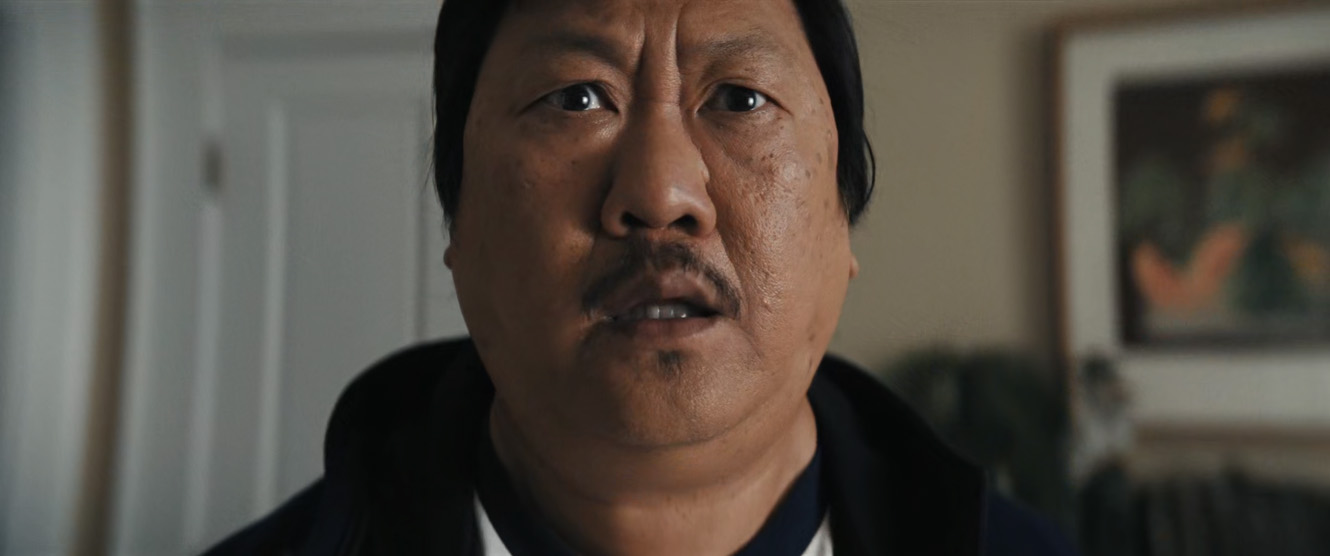
Marcus’ possession is terrifying. It’s not a coincidence that Marcus and Terry were watching a show about fungi taking over the bodies of ants. Watching Marcus lose control, I couldn’t stop thinking of The Last of Us. In that game, infected people sometimes retain awareness, crying, “I don’t wanna” even as they attack. That’s what Wong’s acting captured: a man aware of his body betraying him.
The vomiting of black goo feels like him fighting back, even as his bulging eyes signal terror and surrender. He’s a passenger inside himself, hijacked by someone else’s sadistic plan. It’s chilling.
What was the store clerk thinking?
A bloody man chases a girl into your shop, and your reaction is… “Get out of my store”? My guy thought this was TikTok content instead of an event requiring police intervention.
We don’t know people’s lives
And here’s where my girlfriend’s reviewer was right. We don’t know what people live with daily. Especially children.
Alex went to school like normal, while his parents disintegrated at home due to an aunt I’m certain isn’t really his “aunt.” Justine felt something was off, but nobody saw it. Adults confide in colleagues. Kids don’t. We don’t know their lives behind closed doors — just as parents didn’t know what happened in Justine’s classroom. I could only wonder how often such stuff happens in the communities around us.
Shout out to Alex
Alex is a smart kid. He knows his routes, knows how to grab what he needs, knows how to use Gladys’ tricks against her. His calm action, even in terror, makes him the unlikely hero — and Gladys’ death one of the most satisfying in recent memory.
That was a lot, wasn’t it? Imagine how my girlfriend felt as it hit 11:30 p.m. and we both needed to wash up for bed.
But this is how I watch media. My brain has to unload. My girlfriend needs the break. And that’s why I write a blog.
 Meninity